


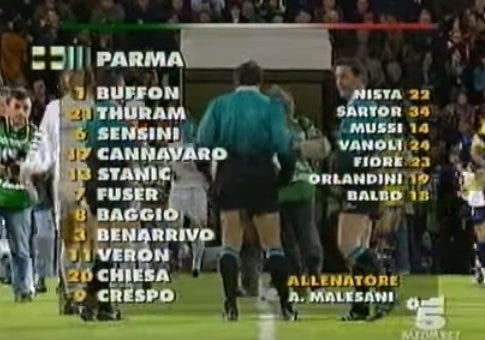
There’s a post that often does the rounds on social media. It’s a Parma teamsheet from the back end of the 90s, and features a quite frankly ridiculous set of players: Buffon, Cannavaro, Thuram, Veron, Baggio, Chiesa and Crespo amongst them. It’s basically a who’s who of 90s football.
It probably does so well on social media because it’s the perfect, nostalgic reminder of just how good Serie A was in the 1990s. Even a provincial team like Parma were attracting some of the world’s best players, and they went on to win the UEFA Cup when the UEFA Cup was almost on par with the Champions League.
But it’s also fascinating because of how Parma have fallen so dramatically after those halcyon days. They only returned to Serie A in 2018 having been as far down as Serie D, and seemed to constantly be on the verge of bankruptcy for much of that exile.
In many ways, Parma are the perfect symbol of Serie A’s decline since the 1990s. Back then it was unquestionably the best league in the world. Now, it’s a shock if an Italian team even reaches the quarter-final of the Champions League.
The question is: how did we get here?
The story of Serie A’s rise and fall starts, funnily enough, in Middlesbrough’s Ayresome Park. In 1966, that was the venue for one of the biggest ever World Cup shocks: North Korea 1-0 Italy.
In 1966, that scoreline was every bit as incredible as it would be today. It meant that Italy exited the tournament at the group stage - a disastrous performance for a team that entered as one of the favourites. And as it probably would do today, it led to grand plans and big overhauls from the country’s football association. Sound familiar?
The Italian football federation’s response to the defeat was dramatic: they immediately banned Italian clubs from signing foreign players. The idea was that the presence of foreign players in Serie A was harming the development of homegrown players. Banning them would mean more playing time for Italian players, giving them more opportunity to develop and resulting in a stronger national team. That was the line of thinking, anyway - and it’s something that plenty of national associations (including Mexico, Turkey and China) do to this day, though its efficacy has never really been proven.
In Italy, the ban on foreign players lasted from 1966 until 1980. In that time, only one Italian club would win the European Cup: Milan in 1969 (and even that was thanks to the help of two foreign players who were allowed to stay in Serie A because they arrived pre-1966). For some context, in the 10 years before the ban, three Italian teams won the European Cup and another two were losing finalists.
Even if the performance of Italy’s club teams was declining, the national team managed to recover from their 1966 nadir. They reached the final of the 1970 World Cup and, shortly after the ban was lifted, won the competition for the third time in 1982. That victory ignited interest in Italian football and meant that foreign players suddenly saw it as an attractive place to play football again. Trevor Francis - the world’s first £1m player - moved to Sampdoria in 1982, Zbigniew Boniek went to Juventus after starring for Poland at the 1982 World Cup, and Danish greats Michael Laudrup and Preben Elkjær followed soon after.
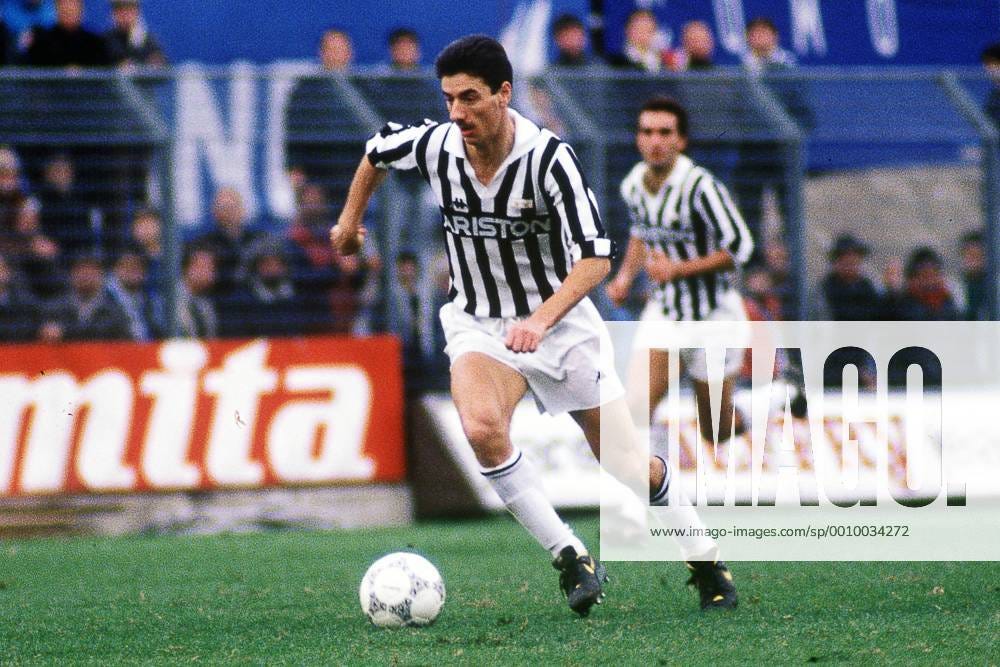
The trickle of foreign players soon turned into a stream. By the mid-1980s, Serie A had established itself as the strongest league in Europe alongside England’s Division One. Italian teams reached the final of the European Cup in 1983 and 1984 and then Juventus won it in 1985, defeating Liverpool in the final. That match would prove to be a pivotal moment for Europe’s top two leagues.
That’s because the 1985 final became better known as the Heysel Disaster; a stadium crush which led to the death of 39 Juventus fans and injuries to 600 more. Though the tragedy was more down to the decrepit state of the stadium than the direct actions of the Liverpool fans, they were deemed solely responsible by UEFA. English clubs were banned indefinitely from European competition, with the ban eventually lifted in 1990 (Liverpool were allowed back in 1991).
The tragedy created a chasm in European football. With the top English clubs unable to play in European competition, the continent’s leading players started flocking to Italy. Plenty of British players also starting making the move to Italy - between 1985 and 1992, Gordan Cowans, Paul Rideout, Paul Elliot, Ian Rush, David Platt, Des Walker and Gazza all moved to Serie A teams.
Though the influx of foreign players undoubtedly helped Serie A become the strongest league in the world, a transfer loophole would have an even bigger effect on the quality of the league.
In 1980, the ban on foreign players in Serie A was finally lifted. Now, each team was allowed one foreign player in their squad, which gradually increased to three by 1988.
But in reality, there were far more foreign-born players in Serie A during this period. That’s because most clubs benefited from a loophole that allowed oriundi - foreign-born players with Italian ancestry - to count as domestic players. It allowed Serie A teams to take advantage of the huge Italian diaspora in South America, and oriundi started flocking to Serie A in huge numbers, including the likes of Javier Zanetti, Diego Simeone, Gabriel Batistuta and Juan Sebastian Verón.
The oriundi helped set up an era of unprecedented dominance for Italian teams on the European stage. From 1989 to 1999, Serie A had at least one finalist in a European competition every season. In four of those years Italy had a finalist in all three competitions, and in 1990 Italian clubs won all three.
The era also produced some of the greatest teams of all time. The all-conquering AC Milan team of the late 1980s won Serie A and the European Cup in 1987-88 before retaining their European title the following season - the first team to do so since Real Madrid in the 1950s. They went on to win three consecutive Serie A titles in the 1990s and dominated European football, spearheaded by the legendary Dutch trio of Marco van Basten, Ruud Gullit and Frank Rijkaard.
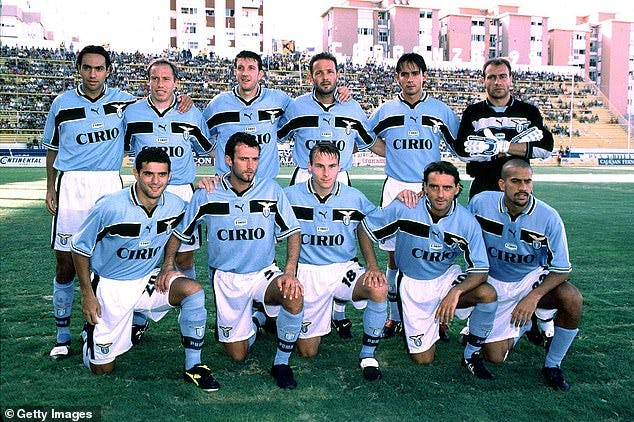
Yet the rest of the ‘Seven Sisters’ also built era-defining teams. Inter won the UEFA Cup three times and had the world’s best player in Ronaldo. Juventus won three Serie A titles and reached the European Cup final three times, winning it once. Lazio were bought by food tycoon Sergio Cragnotti and signed the likes of Paul Gascoigne, Juan Sebastián Verón, Hernán Crespo, Marcelo Salas, Christian Vieri and Pavel Nedvěd.
External factors were also helping to fuel the success of these Serie A teams. In the mid-1980s the Italian economy was booming, largely down to a revival in the manufacturing, fashion and export sectors. It even surpassed the UK economy in 1987, in an event that became known as il sorpasso. This was making a lot of people rich, and those rich people were suddenly looking for somewhere to spend their money. They often landed on football clubs.
Speaking to the BBC in 2026, Italian football expert James Richardson explained how seemingly every Serie A club in the 80s and 90s had a wealthy local ‘padrone’ - a benefactor who would spend lavish amounts of lira on the team. “They would curry favour in their city, demonstrating their largesse by spending large sums of money on players that they didn’t always need,” he explained.
Perhaps the best example of this was Calisto Tanzi, the CEO of food conglomerate Parmalat. His company bankrolled the success of Parma in the 1990s, who went from a middling Serie B team in 1989 to one of the leading clubs in Europe by the end of the decade. Their big spending was atypical of Serie A at the time. Between 1984 and 2000 the world transfer fee record was broken 12 times - nine of which were by Italian clubs.
However, Parma’s success was short-lived. Their demise mirrors the fall of Serie A and the Italian economy itself.
Though Italian football boomed in the 80s and 90s, there were warning signs during this period that suggested darker times were ahead.
One issue was financial sustainability. Though total Serie A revenue was €400m in 1992 - compared to €255m in England’s top league - by 1996/97 the newly-established Premier League had overtaken the Italian league in revenue. That was partly because of the padrone-fuelled business model of most Serie A teams, but other factors were at play too.
For example, in England the Hillsborough stadium disaster had led to the Taylor Report recommending the construction of all-seater stadia. It meant that over the course of the 1990s, many English clubs started redeveloping or even rebuilding their stadiums, maximising their revenues and bringing them in line with modern design standards. It helped to boost club revenues.
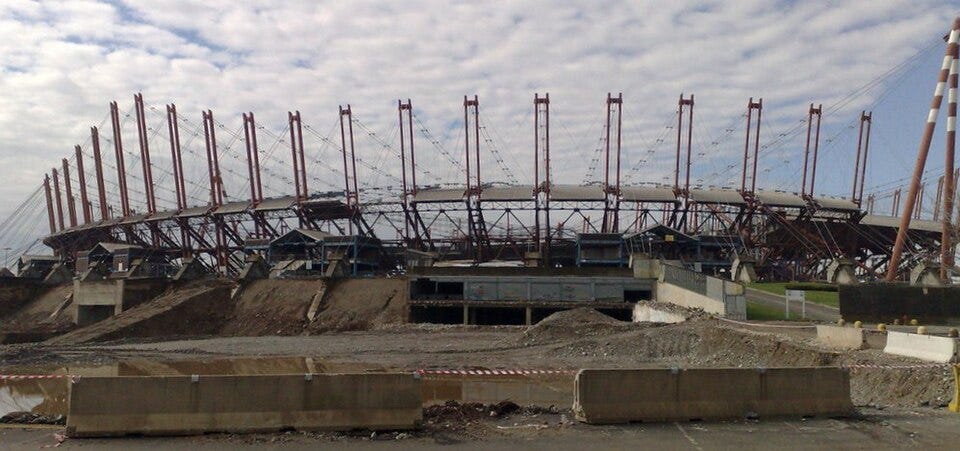
But in Italy, most clubs played in poorly-maintained, decaying stadiums that were often owned by the local council. That meant they didn’t make much money from them and were unable to modernise them to the same degree. In some ways this was quite unfortunate - several Italian stadiums were redeveloped ahead of the World Cup they hosted in 1990, but because the early 1990s were a turning point in stadium design, the stadiums soon went out of fashion. Juventus’ Stadio delle Alpi was built in 1990 but demolished as early as 2009 because it was deeply unpopular with supporters.
The Italian economy may have been booming in the 1980s, but economists have since pointed out that such growth was always unsustainable. According to one, ‘the ratio of government debt to GDP snowballed from 56% in 1981 to 94% in 1991.’ It meant that ‘the economic system was high from the injection of public money,’ leading to accusations of a drugged economy propped up by public spending.
In many ways, the Italian economy had similarities with the padrone-led system in Serie A. Though these clubs spent lavishly in the 90s, many had spent beyond their means. By 2001, total player costs among leading clubs averaged 125% of revenue in Italy compared to 85% in Spain and 75% in England. Without the ticket revenue to support them, Italian clubs began to suffer and sell.
Premier League clubs also started to establish themselves as global brands in the 90s. Manchester United opened club shops in Asia, Australia and the Middle East, and started to develop a global fanbase. Arsenal’s highly international squad and slick style of play started to draw admirers from across the globe. And of course, the global dominance of the English language certainly helped to spread the Premier League’s appeal.
The final nail in the coffin for Serie A’s dominance came with the seismic Bosman ruling in 1995. It removed foreign player caps in domestic and European competition, meaning that Serie A’s oriundi advantage had suddenly been wiped out. Other leagues could now recruit more aggressively from around Europe, and they did: Chelsea became the first European team to name an all-foreign starting XI in 1999.
The penny was now starting to drop for Italian teams. Their on-the-pitch success was masking deeper, underlying issues which were beginning to play out. It came to a head in 2001 when Juventus’ star player (and arguably the best player in the world) Zinedine Zidane joined Real Madrid for a world record fee of €77.5m. As Steven G. Mandis writes in his book What Happened to Serie A*, ‘before then, it was widely believed that the best players in the world played in Italy and wanted to play in Italy. Zidane leaving Italy was the biggest sign yet that things were changing.’
Italian teams continued to have success on the pitch into the 2000s, and 2003 even saw an all-italian Champions League final between AC Milan and Juventus. But since then, European success has become evermore fleeting for Italian clubs. Milan won the competition in 2007, and then Inter did so in 2010. Their success turned out to be the last European title won by an Italian team.
A series of scandals didn’t help the league either. First there was the passaportopoli scandal of the early 2000s, which alleged that Italian teams were faking the Italian ancestry of South Americans and even forging passports for them. Then, the 2006 calciopoli match-fixing scandal left Juventus in Serie B and the league’s reputation in tatters.
Nowadays, the Premier League is utterly dominant. The league reported total club revenues of €7.1bn (£5.9bn) in 2023 - that’s almost double the combined revenues of its nearest challengers, Spain’s La Liga and Germany’s Bundesliga. Serie A sits fourth in the league; now someway off its minted competitors. There was no Italian club in the top 10 of the Deloitte Football Money League 2026.
On the pitch, the financial advantages that Premier League clubs have long enjoyed are starting to play out on the pitch. Since 2018-19, English clubs have won more Champions League titles (three) than any other country. Seven English teams have reached the final in that period; the next best is France with three (all of which were Paris Saint-Germain). It doesn’t quite match the dominance of Italy in the 1990s, but it’s starting to reach that point.
Whether Italian teams will ever again reach the heights of the 1990s is open to debate. However, the same structural issues that held the league back then still exist today. Most clubs still don’t own their stadiums, and many of them are in a state of disrepair. The league’s TV revenues are dwarfed by other countries, and their teams have become global brands in a way that Serie A clubs never managed. Football clubs are now multi-billion pound businesses, and local padrones can’t simply buy their way to success like they once did.
Football has changed, and Italy failed to keep up. But at least we’ll always have the social media content of those legendary teamsheets.
*I sourced some key information for this article from Steven’s excellent book What Happened to Serie A. If this article has whet your appetite for a deep dive into Serie A, please consider buying it.