


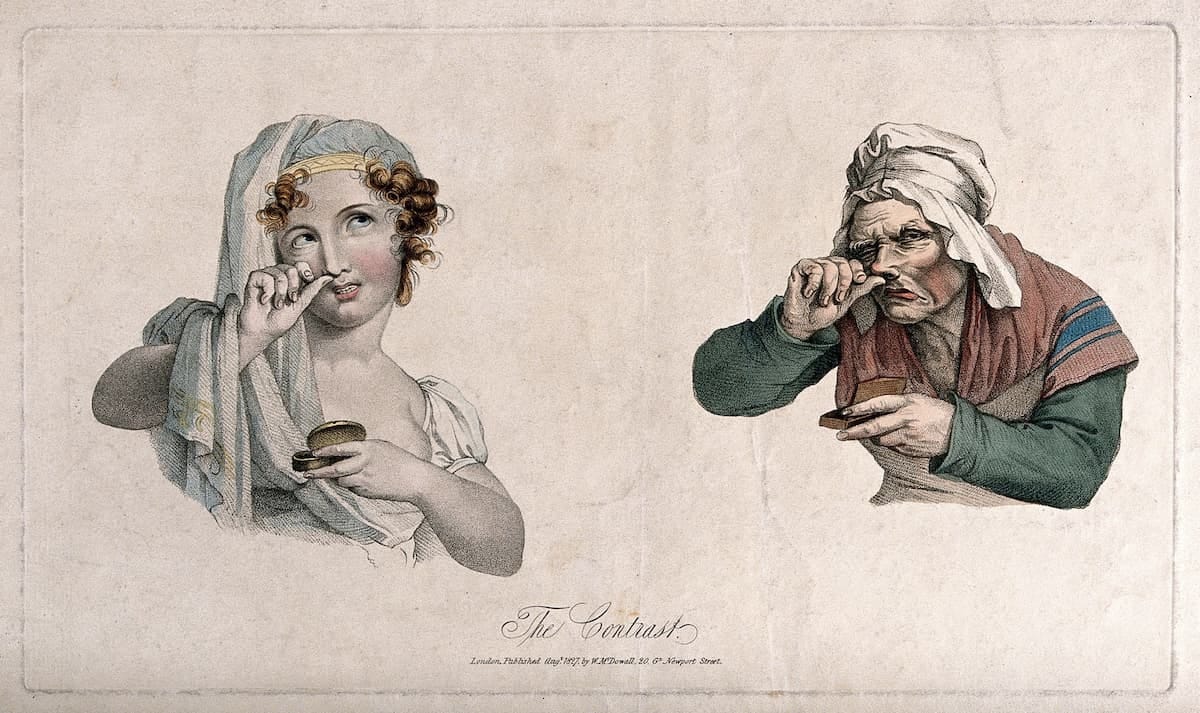
For as long as I can remember, I’ve been belting out Sheffield United’s anthem Greasy Chip Butty from the terraces of Bramall Lane. And for as long as I can remember, I’ve puzzled over the last few lines of the song.
You fill up my senses,
Like a good pinch of snuff.
Snuff? As a kid in the early 2000s, I would sing this without having any idea what it actually meant. And even though I now know what snuff is, I still don’t think I’ve ever grasped just how popular it used to be.
How was it so well-known that it was being referenced in football songs?
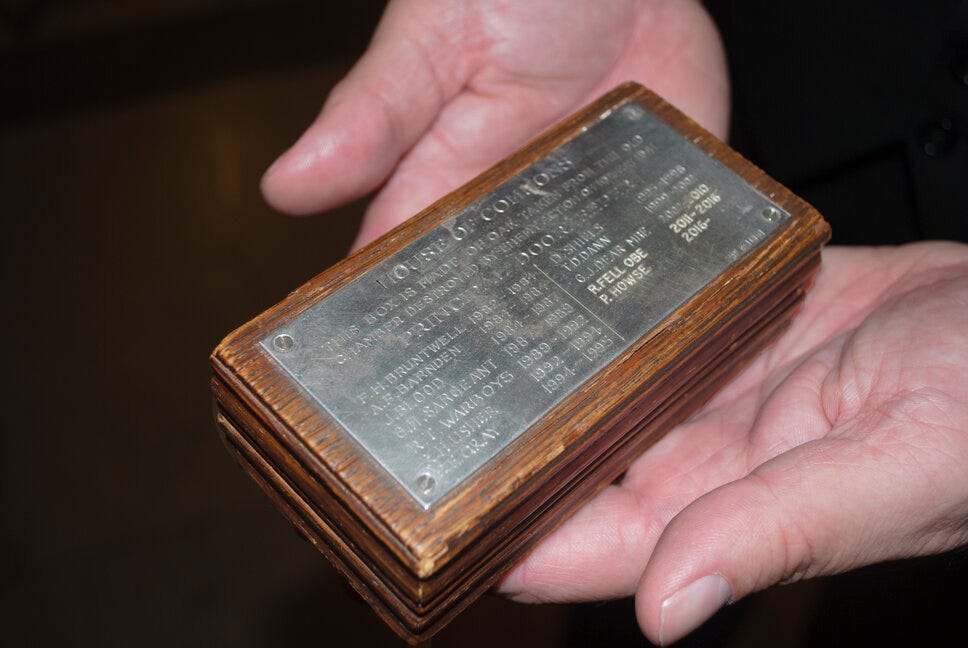
Why does the Houses of Commons still have a communal snuff box for every sitting member?
And what happened so that it had fallen off the face of the earth by the time I was a teenager?
This is the story of snuff: once upon a time Britain’s favourite drug, now a long-forgotten period of the country’s long relationship with drugs.
Christopher Columbus didn’t discover the Americas, and he certainly didn’t discover snuff. But he was one of the first Europeans to notice the native population snorting a fine, tobacco-like substance. They would grind their tobacco leaves into a light powder using a rosewood pestle, which would give it a gentle wooden aroma. This made the process of snorting it slightly more pleasant.
This was in the late 1400s, and in news that will surprise absolutely nobody, it was soon plundered to be produced in Europe in vast quantities. By the early 1500s, Spain had established a trade monopoly on the snuff that was being imported from the Americas, and Seville became Europe’s first major production centre.
Snuff soon spread. By 1560 it was commonplace in the Netherlands, and the Dutch gave the powdered tobacco its name that we still use today. Snuff is a shortened version of the Dutch and Flemish word ‘snuffen,’ which means ‘to sniff.’
The idea that snuff had medicinal properties was a big factor behind its early rise. Catherine de’ Medici, Queen of France from 1547 to 1559, was a known snuff user and took it to treat her persistent headaches. The Chinese believed that snuff cured pains in the eyes and teeth, alleviated throat ailments and aided constipation. Soon, the English were believers too.
The 1665 Great Plague of London killed an estimated 100,000 people (one-quarter of London’s population at the time), but it was later said that no London tobacconist died from the disease. That’s because snuff was thought to protect you from various ailments, including the plague. This mistaken belief drove the first snuff craze in the UK, and its popularity boomed. But with Spain still holding a trade monopoly, snuff remained prohibitively expensive for most people.
Still, snuff was an instant hit with the British elite. It quickly became a measure of your status in society; a man was judged on the quality of his snuff and accompanying accessories. A true dandy would draw some snuff from his elaborately decorated box with a special spoon. He would use a silk white handkerchief to delicately clean his nose afterwards. Mustachioed men would bear a brush to remove any remnants.
Indeed, its popularity amongst the well-to-doers was such that when smoking was banned from the House of Commons in 1694, a snuff box was installed for sitting members to take from as they please. It’s still there today.
Though snuff was largely a preserve of the upper classes at this point, that all changed when the English navy captured several Spanish ships during the Battle of Vigo Bay in 1702. On board they found an estimated 50 tonnes of snuff which were on the way to Spain from Havana. In an account of the battle, Charles Lillie, a well-known English ‘perfumer’ and snuff manufacturer, explains how this made snuff available to the masses.
“Thus, though snuff taking was very little known or practised in England, at that period, the quantities taken in this expedition, (which was estimated at fifty tons weight,) plainly shew that in the other countries of Europe, snuff was held in great estimation, and that the taking of it was considered not at all unfashionable,” he wrote.
Upon their return to England, sea officers and sailors became snuff traders and merchants. Lillie writes that ‘waggonloads’ of so-called ‘Vigo Snuff’ were sold at port towns across the country ‘for not more than three or four pence per pound.’ What previously cost several pounds now cost little more than a penny.
“From the above mentioned quantity of different snuffs,” Lillie concludes, “thus distributed throughout the kingdom, novelty being quickly embraced by us in England, arose the custom and fashion of snuff taking; and, growing upon the whole nation, by degrees, it is now almost as universal here, as in any other part of Europe.”
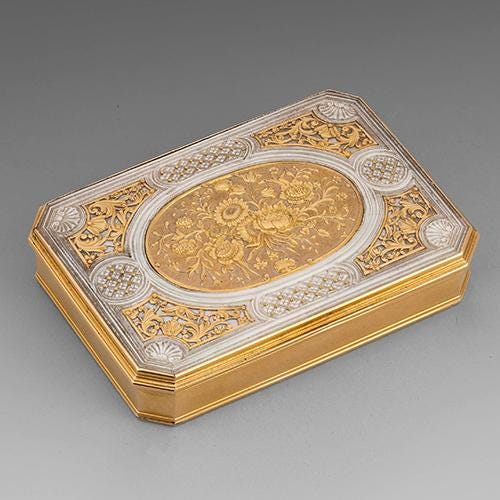
Suddenly, snuff was being snuffed at every level of British society. Not happy with this, the elites started to set themselves apart from the proles by buying evermore extravagant snuff boxes. They would often be decorated with precious gemstones or made entirely from precious metals like gold and silver. Some opted for quantity over quality: Lord Petersham was said to own 365 snuff boxes - one for every day of the year. In contrast, the working class used more simple designs; their snuff boxes were often made from brass, papier-mâché or wood.
Snuff’s rise continued unabated throughout the 18th century. By this point it was openly taken at even the very top level of society: Queen Charlotte, King George IV and Napoleon were all noted users. Further down the food chain, major societal changes were helping to propel its popularity amongst the working classes as well.
With the industrial revolution came a massive movement of people from the countryside to the cities. But whether you were in the cotton mills of Manchester, the coal mines of Wales or the steel factories of Sheffield, everybody agreed on one thing: that smoking a pipe was a very bad idea. The working environments in these factories were often extremely dangerous, and workers performed in cramped spaces surrounded by highly inflammable materials and machines. It meant that to get their nicotine fix, factory workers turned to chewing tobacco or taking snuff. This turned a whole new generation of the working class into snuff users.
Despite its growing popularity with the working class, snuff never really lost its strong associations with the elite. This is probably best laid out by Charles Dickens, who was a well-known snuffer himself. In his 1837 novel The Pickwick Papers, the lawyer Mr. Perker and Master of Ceremonies Angelo Cyrus Bantam are both snuff users, but the working class Sam Weller and his father Tony are not. Instead, Tony is often seen smoking a pipe - traditionally the more common way of taking tobacco amongst the working classes.
But ironically, it was another foreign war that would really snuff out snuff’s fortunes.
In the mid-19th century, British soldiers returning from the Crimean War started to imitate their Ottoman Turkish comrades by smoking tiny rolls of newspaper filled with tobacco. The practice soon took off back home, and companies started producing cigarettes en masse to meet the demand. This made sense on a practical level; cigarettes were cheaper and easier to produce than snuff because they didn’t need to be ground into a fine powder or infused with different scents. The first patented cigarette-making machine arrived in 1847, but James Albert Bonsack’s 1888 version really ramped things up. Almost overnight, cigarette companies went from making 40,000 hand-rolled cigarettes daily to 4 million. The cigarette had officially arrived.
But the shift from snuff to cigarettes didn’t just happen for practical reasons. Snuff was increasingly being looked down upon in society for a number of reasons. Firstly, snorting a big wedge of tobacco wasn’t exactly the most subtle or refined thing to be doing in public. It’s also pretty common to sneeze immediately after a pinch of snuff, particularly for inexperienced users. And regular snuff users would almost always need to carry a handkerchief with them to wipe their noses after a snort (these handkerchiefs started to appear in darker colours because the early white designs got covered in brown tobacco stains).
Even snuff’s medicinal qualities were starting to be doubted. Warnings about the safety of snuff had been aired from the early 1700s. They had mostly been ignored at the time, but were now starting to gather pace. Snuff was starting to be linked with breathing difficulties, digestion issues, and even nasal cancer.
At the same time, cigarettes were increasingly seen as cheaper, cooler - and healthier. The 1930s onwards saw a deluge of ads from big tobacco extolling the virtues of smoking. Somehow, they convinced people that smoking tobacco was healthy but snorting it was not.
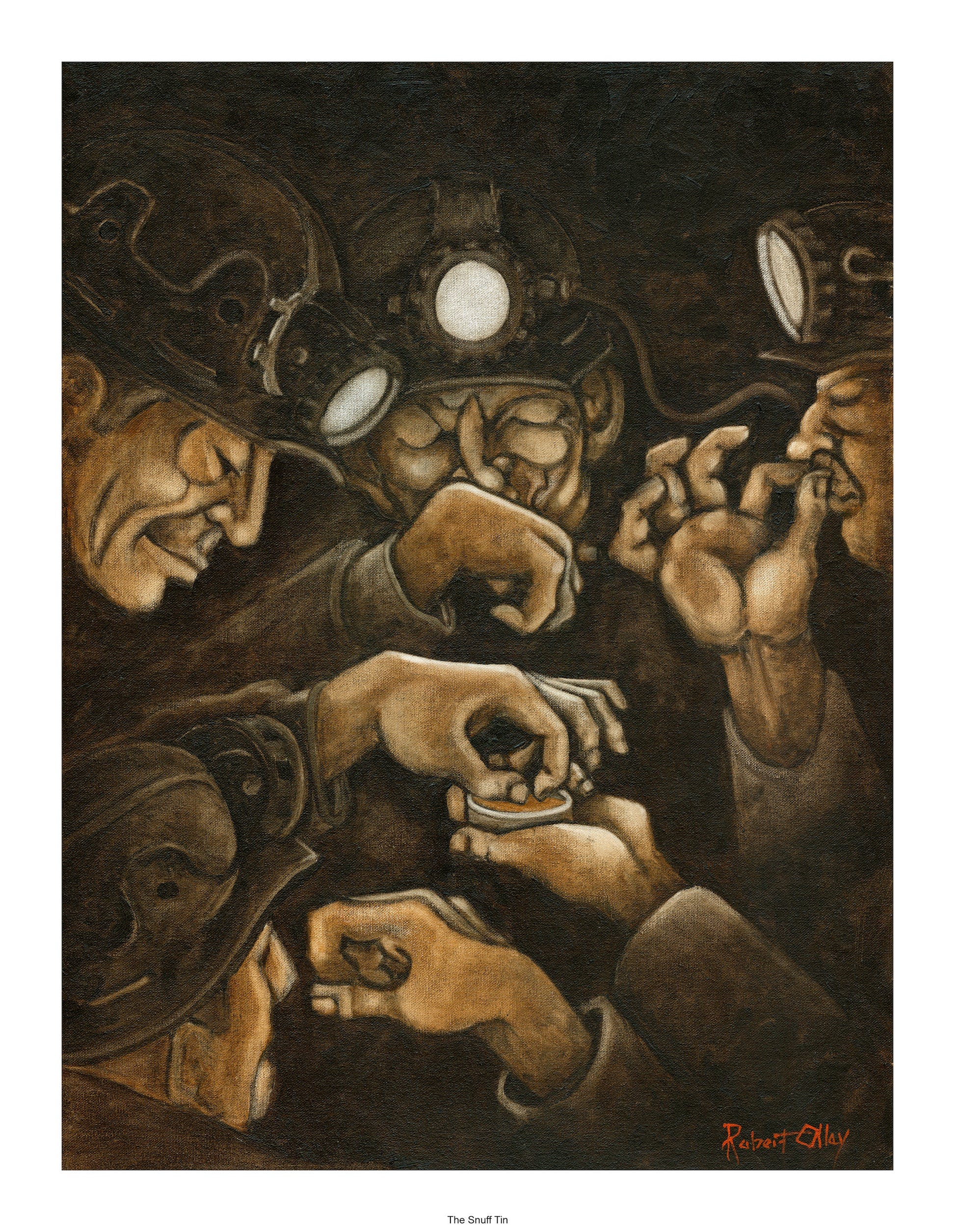
Even though cigarettes gradually replaced snuff over the course of the 20th century, in some communities the practice of snuff-taking lasted well into the 1900s. According to the National Coal Mining Museum, miners canteens (which catered for 90% of the mining workforce by 1946) would sell snuff and other supplies to workers before they started their shift. In a Facebook group for ex-coal miners, dozens of commenters have shared how they would bring a tin of snuff with them for their shift. One person even mentions that the local newsagents would open at 4am to sell snuff and chewing tobacco to the local miners.
And so in a city like Sheffield, which has strong historical links with the mining industry, you can understand why snuff was on the minds of the Sheffield United fans who first composed Greasy Chip Butty in the 1970s. The lyrics describe the small pleasures in life: a gallon of magnet (beer), a packet of woodbines (cigarettes), a greasy chip butty and, of course, a good pinch of snuff. This gives you a good idea as to how snuff was seen by many people in the 1970s.
Today, snuff lives on in ways like this rather than in any tangible sense. Occasionally a renaissance is reported - like in the aftermath of the UK’s 2007 smoking ban - but it has never truly threatened to regain its former popularity. People tend to snort more exotic substances and if they’re looking for a smoking alternative, exotically-flavoured vapes tend to be the go-to choice.
Sheffield United fans may still sing about a good pinch of snuff, but an increasingly small slice of them will have ever tasted the fine powder which once captivated the country.