


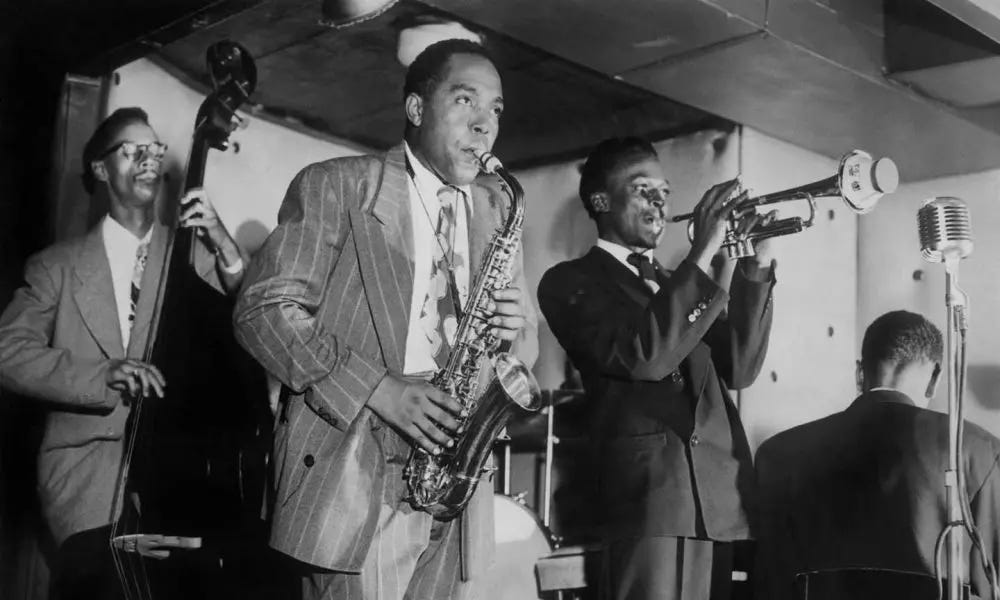
‘Everybody was rocking and roaring. Galatea and Marie with beer in their hands were standing on their chairs, shaking and jumping. Groups of guys stumbled in from the street, falling over one another to get there. “Stay with it, man!” roared a man with a foghorn voice, and let out a big groan that must have been heard clear in Sacramento, ah-haa! “Whoo!” said Dean. He was rubbing his chest, his belly; the sweat splashed from his face.’
Reading back this passage from Jack Kerouac’s novel On The Road, it’s difficult to believe that the thrilling scene he’s writing about is a jazz gig. However, back in the 1940s - when the novel is set - jazz was undoubtedly the most popular and exciting music genre on the planet. Its biggest stars were global celebrities and their shows packed out concert halls all over the Western world. The 1920s were christened the Jazz Age, and the American Dialect Society even named ‘jazz’ as the word of the 20th century.
But just 20 years after the book was set, jazz was pretty much dead in the water. It had long been displaced from its position at the peak of music, and in 1967 Melody Maker even wrote a requiem for the jazz ‘we loved and knew so well.’
So how exactly did jazz disappear from the public eye so quickly and so dramatically?
Though the first jazz record was technically Livery Stable Blues by The Original Dixieland Jazz Band in 1917, the music’s origins stretch back to the African-American slave communities of the mid-1800s. Back then, jazz wasn’t really jazz in the way that we understand it today. It was a mishmash of various different genres such as ragtime, blues and gospel.
But jazz began to crystallise in New Orleans in the first two decades of the twentieth century. Mainly Black musicians would hone their craft late at night in the city’s red-light district, performing in late-night bars and brothels in an area known as Storyville.
Jazz was also popular in other American cities at this time, most notably Chicago and New York. But because The Original Dixieland Jazz Band were the first group to put out a recording, New Orleans Jazz became the genre’s first dominant style. And when the record was released, it was a sensation. Distribution networks had been established throughout the West in the decades preceding World War 1, meaning the record travelled far and wide - far wider than any other recording had to date. Though it has been claimed that Livery Stable Blues was the first million-selling record, that’s a bit of an urban myth: only 250,000 copies were ever manufactured.
Still, the record took New Orleans Jazz international and proved to be the foundation for the first golden age of jazz. Because when alcohol was outlawed in the United States in 1920, jazz rapidly became the music of Prohibition-era America. Jazz bands were hired to play in illicit speakeasies, and they earned huge sums (often from criminal gangs) for doing so.
And so jazz soon became associated with alcohol, illegality and immorality - according to the older generation anyway, who dismissed it as ‘an irritation of the nerves of hearing’ whilst simultaneously seeing it as a genuine threat to society. As if to illustrate the moral panic over jazz, at different points throughout the 1920s the New York Times blamed jazz for the quality of Italian tenors, a poor trade balance with Hungary, a classical musician’s fatal heart attack and frightening bears in Siberia.
As Stuart Nicholson writes in his history of the genre, “jazz music quickly became associated with youth, energy and a revolt against convention.”
But as we moved into the 1930s and the end of Prohibition, jazz became more polished, more professional, and more popular. It also went bigger in every sense of the word. Small, tight-knit groups playing in dimly-lit speakeasies gave way to huge ensembles playing in lavish ballrooms. This shift was partly out of necessity: it was before the time of electronic PA systems, and so to make yourself heard in big ballrooms, you needed more musicians. Hence the arrival of the big band era.

With big bands came big names. During this time, some of the biggest stars in jazz were born: Louis Armstrong, Benny Goodman, Duke Ellington and Cab Calloway among them. The music had become popular not just in America, but globally. European audiences had been captivated by American jazz musicians performing live on their shores, while the onset of radio in the 1930s helped widen jazz’s appeal even further.
By 1939, jazz was undoubtedly the most popular music genre in the world. Then World War 2 hit. With most recorded jazz music still emanating from the US, it meant the American recording ban enacted in 1942 had big repercussions on the world of music. Once again, jazz went back to only being performed in the clubs of New Orleans, Chicago and New York. Crucially, that didn’t stop its progress. Because whilst the world went to war, a new form of jazz was waiting to emerge; one which would reenergise the genre and help maintain its position as number one.
When bebop first appeared in 1945, it sounded like it came out of nowhere - which in a sense, it had. But in actual fact, it had been ruminating in the bars and clubs of New York’s Harlem and Chicago’s South Side during the wartime years, waiting to be unleashed on an unsuspecting public.
Quicker, faster and more intense than the previous iterations of jazz, bebop hurled the music forward into the second half of the twentieth century. It’s at this point in the story where Kerouac’s vivid descriptions of jazz come from, and you can get a sense of just how thrilling bebop was in his writing:
“Boom, kick, that drummer was kicking his drums down the cellar, and rolling the beat upstairs with his murderous sticks, rattlety-boom! The pianist was only pounding the keys with spreadeagled fingers, chords, at intervals when the great tenorman was drawing breath for another blast - Chinese chords, shuddering the piano in every timber, chink and wire, boing! The tenorman jumped down from the platform and stood in the crowd, blowing around; his hat was over his eyes, somebody pushed it back for him. He just hauled back and stamped his foot and blew down a hoarse, laughing blast, and drew breath, and raised the horn, and blew high, wide, and screaming in the air.”
The wartime intensity and disquiet of bebop soon transitioned towards softer, smoother sounds that marked the optimistic new era of the 1950s. The decade also marked the emergence of some of jazz’s biggest ever names, including Charlie Parker, Thelonious Monk, Miles Davis and Herbie Hancock.
In fact, writer Fred Kaplan argues that jazz hit its peak in the 1950s; specifically in 1959. That was the year of Kind of Blue by Miles Davis, Time Out by Dave Brubeck, Ah Um by Charles Mingus, and The Shape of Jazz to Come by Ornette Coleman.
However, the signs of jazz’s downfall were already on the horizon.
There’s a scene from the 1957 film Jailhouse Rock in which the film’s protagonist Elvis Presley encounters a group of jazz fans. But they’re not presented as cool, youthful, or rebellious, like they may have been 10 years earlier. Instead, they’re depicted as elitist, pretentious and out of touch. The scene suggests that now, rock’n’roll was the true music of youth and rebellion.
The scene may have arrived a couple of years before jazz’s supposed peak in 1959, but it suggests that jazz was already losing favour with young people. And after the emergence of pop and rock in the 1960s, jazz had been well and truly shunted into the background.
Suddenly, jazz - for the first time since it had emerged in the late 1910s - was seen as out of touch.
In the 1960s, some jazz musicians attempted to bridge the gap between their own genre and the dominant musical styles of the time: for instance, Miles Davis experimented with jazz-rock fusion, with mixed and middling results. But many went the other way, often by doubling down on increasingly experimental and inaccessible styles. One of those was free jazz: a careering, rule-free subgenre of jazz that had the tendency to sound like a group of cats being strangled. It only reinforced the idea that jazz was increasingly being made by a diminishing numbers of pretentious musicians, who were only really making the music to please themselves and their peers.
Though the 1960s were one of the most vibrant and creative decades in the wider world of music, they were lean times for jazz. In 1967, Melody Maker published a requiem for the jazz that “we loved and knew so well.” DownBeat magazine - a famous jazz publication - also declared it dead, with their attempt to stay relevant perhaps best illustrated by the fact that Jimi Hendrix was added to their Jazz Hall of Fame in 1970. The Atlantic, meanwhile, summed things up nicely: “Jazz seemed dominated and diminished by rock-oriented fusion,” it reads, “marginalised by outré experimentation, and disconnected from the youth audience.”
The subsequent decades weren’t much kinder to jazz. Miles Davis carried the genre on his back for a number of years, but the 1980s are seen as the first decade not associated with any new style or movement.
Still, at least jazz still had its finger on the pulse of society. Stuart Nicholson notes that in the 80s, jazz became a microcosm of the individualistic, money-obsessed era of Thatcher and Regan. Musicians started to strike out on their own, favouring solo albums and prioritising the idea of the individual star rather than the traditional group dynamics of jazz bands. Society? There’s no such thing as society.
In the mid-1990s, jazz’s downfall was immortalised in a comedy sketch from The Fast Show, in which Louis Balfour is the pretentious, ultra laid-back host of The Jazz Show.
“Seemingly having done his ‘research’, he introduces his guests by comparing them to avant-garde jazz musicians or describing their style/technique by using complex musical phraseology,” reads the show’s Wikipedia entry. “These guests usually turn out to be utterly talentless ‘experimentalists’, generally to his bemusement. Although he also often appears to appreciate the music, on one occasion he follows his apparent appreciation with a look of disgust. His catchphrase ‘Nice!’ is delivered after turning to a different camera for that word only; he later delivers other words in a similar manner.”
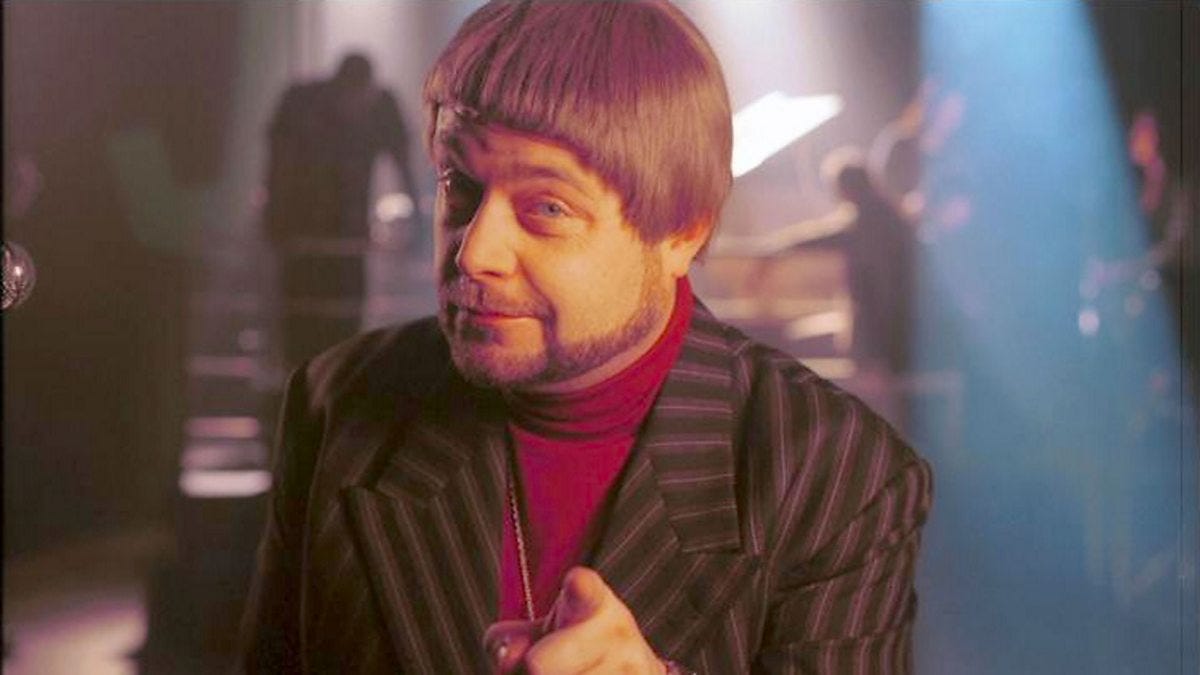
In his book Unapologetic Expression, André Marmot writes how “The Fast Show sketch branded jazz as deeply uncool for an entire generation.” Later in the book, he wonders something which many jazz fans may have also been wondering: “How did it go from that, to this?”
The reasons, as ever, are complex.
The first is sheer probability. No genre is ever going to stay on top decade after decade - that jazz managed to do so is testament to its adaptability.
Back when jazz first reigned, there simply weren’t as many genres of music out there. It meant that staying on top was far easier than it is now. And jazz evolved into so many different branches that people could easily opt for divergent styles. It was a broad church that could encompass different tastes and different people.
Starting in the 1950s, other genres also gradually pushed jazz to one side. First it was Elvis and his Jailhouse Rock, then it was The Beatles and Dylan and all the rest in the 1960s. By the end of the 1970s, there were suddenly more genres out there than you could ever have imagined: funk, disco, punk, psychedelia, pop, rock, house. There was simply too much competition outside of jazz and too little innovation inside jazz for it to compete.
Counter-intuitively, jazz’s longevity also started to work against it. Spending 40 years at the top meant that the genre had plenty of opportunities to grow, expand and experiment. But decade-after-decade of experimentation gradually led jazz down ever-more avant-garde paths. Free jazz was frequently unlistenable, jazz fusion was hit and miss, nu jazz was…nu jazz. Such divergence from jazz’s traditional roots disenfranchised plenty of fans and led to those accusations of pretension.
Jazz was in the doldrums for many years. However, there are signs that it’s making a comeback. Marmot’s book is dedicated to the recent ‘explosion’ of UK jazz, something which was topped off by jazz group Ezra Collective’s Mercury Prize win in 2023. There’s certainly a feeling that it’s no longer seen as uncool or pretentious in the way that it was in The Fast Show.
That being said, it’s also unlikely to ever reign the airwaves in the same way it once did. Maybe jazz will never get back to being that anymore - but it’s not quite the deeply uncool form of music it was once painted as.